↘ under moscowAll linesRU
← The guide
ROLLING STOCK / MOSCOW

Train atlas

Recognise the trains beneath and above Moscow.

Seven train families · Metro, MCC and MCD · model photos and technical artwork.

01 / TRAIN FAMILY

Numbered series

81-717/714 and variants
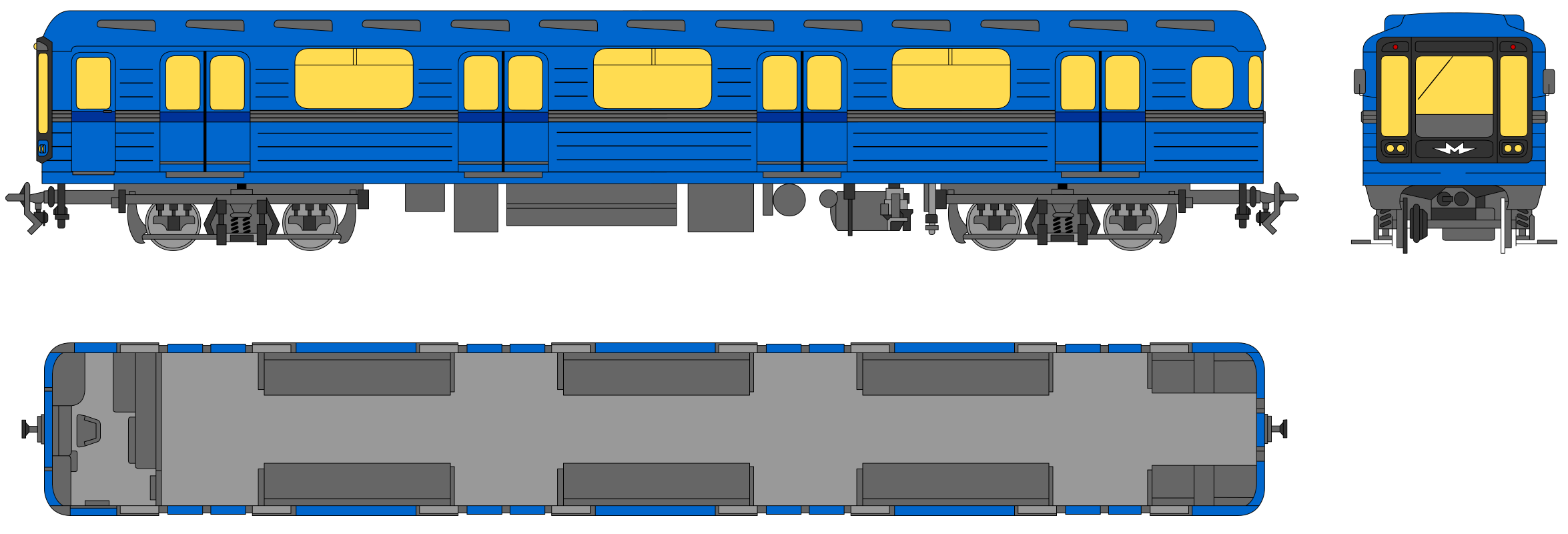
Numbered series — technical illustration
Technical illustration · ChristoWikimedia Commons ↗CC0

How to recognise it

  • Classic body with four doorways on each side
  • Separate carriages without a through gangway
  • 81-717.6 has a different cab face and renewed interior

Where you may meet it

Examples of lines, not a guarantee for the next service. Open a line guide for fleet details.

Operator source ↗ · Operator source ↗

02 / TRAIN FAMILY

Rusich

81-740/741 family

Rusich — model photograph
Model photograph · Caughtin16kWikimedia Commons ↗CC0

How to recognise it

  • Each carriage consists of two articulated sections
  • The articulation joins halves of a carriage, not the whole train
  • Train formation varies by line

Where you may meet it

Examples of lines, not a guarantee for the next service. Open a line guide for fleet details.

Operator source ↗ · Operator source ↗

03 / TRAIN FAMILY

Oka

81-760/761;81-760A/761A/763A

Oka — model photograph
Model photograph · Kirill BorisenkoWikimedia Commons ↗CC BY-SA 3.0

How to recognise it

  • Four doorways on each side of a carriage
  • Climate-controlled carriages
  • Only certain variants have through gangways

Where you may meet it

Examples of lines, not a guarantee for the next service. Open a line guide for fleet details.

Operator source ↗ · Operator source ↗

04 / TRAIN FAMILY

Moskva family

81-765/766/767;81-775/776/777 and versions2020/2024/2026

Moskva family — model photograph
Model photograph · XenotronWikimedia Commons ↗CC0

How to recognise it

  • Walk-through gangways
  • Wide doors and passenger information displays
  • Newer variants include USB and Type-C charging

Moskva · 2017 · 81-765/766/767

Moskva 2020 · 81-775/776/777

Moskva 2024 / 2026 · 81-775.2/776.2/777.2

These are generations within one family. The photograph shows the original generation; cab and interior details vary.

Where you may meet it

Examples of lines, not a guarantee for the next service. Open a line guide for fleet details.

Operator source ↗ · Operator source ↗

05 / TRAIN FAMILY

Lastochka

ЭС2Г and variants

Lastochka — model photograph
Model photograph · SmallSonMarexWikimedia Commons ↗CC0

How to recognise it

  • Overhead-electric urban and suburban train
  • Large multipurpose areas
  • Climate control and large windows

Where you may meet it

Examples of lines, not a guarantee for the next service. Open a line guide for fleet details.

Operator source ↗ · Operator source ↗

06 / TRAIN FAMILY

Ivolga

ЭГ2Тв / ЭГЭ2Тв, generations1.0–4.0

Ivolga — model photograph
Model photograph · XenotronWikimedia Commons ↗CC0

How to recognise it

  • Open interior without traditional vestibules
  • Generation 4.0 has three doorways per side of intermediate carriages
  • Power outlets and multipurpose areas

Where you may meet it

Examples of lines, not a guarantee for the next service. Open a line guide for fleet details.

Operator source ↗

07 / TRAIN FAMILY

EP2D / EP2DM Korolyok

ЭП2Д / ЭП2ДМ

EP2D / EP2DM Korolyok — model photograph
Model photograph · Artem SvetlovWikimedia Commons ↗CC BY 4.0

How to recognise it

  • Modern suburban electric train
  • The actual model depends on the service
  • Operates alongside diameter and other suburban services

Where you may meet it

Examples of lines, not a guarantee for the next service. Open a line guide for fleet details.

Operator source ↗ · Operator source ↗

BEFORE TODAY’S TRAINS

Earlier generations.

The network began with types A and B. Later generations included V, G, D, E and Ezh variants. Yauza (81-720/721) introduced another experimental chapter. These are historical types rather than the regular fleet presented above. Restored A carriages and Ezh3 / Em-508T trains may appear on special museum or celebration services.

History and model classification · Wikipedia ↗